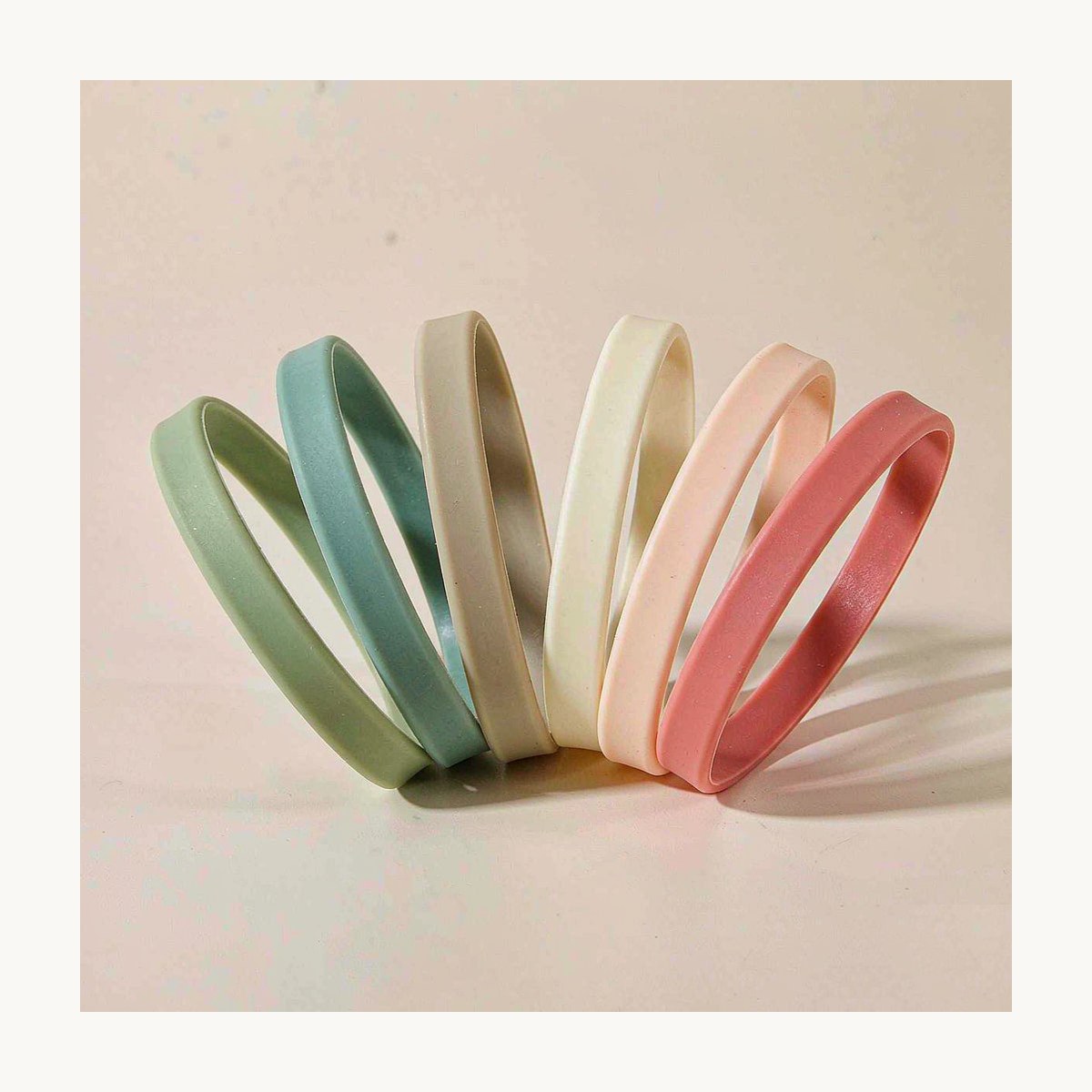
The one-line difference
All three are moulded, but they are not the same family. Silicone is a premium flexible elastomer with excellent heat and weather resistance. Rubber here means cured elastomers such as EPDM and NBR — the workhorses of seals, gaskets and vibration parts. Soft PVC (flexible polyvinyl chloride) is a mouldable plastic: colourful, rigid-ish and cheap at volume, but not an elastomer.
If you are not sure which you are already using, send a sample — we identify the material and quote the closest production match. See our silicone, rubber and soft PVC pages for the full property sheets.
Compare them on what buyers actually care about
| Property | Silicone | Rubber (EPDM / NBR) | Soft PVC |
|---|---|---|---|
| Temperature range | −40 °C to 230 °C | −40 °C to 120 °C typical | −20 °C to 80 °C |
| Hardness | 20–80 Shore A | 30–90 Shore A | 50–95 Shore A (semi-rigid) |
| Food contact | Food-grade platinum grades | Only selected compounds | Not a food material |
| Colour | Pantone-matched, soft matte | Limited, mostly black | Most vivid, any Pantone |
| Flex life | Excellent | Very good | Good, can stiffen cold |
| Tooling cost | Moderate | Moderate | Lowest |
| Best for | Heat, skin-touch, premium | Sealing, oil, outdoor | Colourful branded goods |
Choose silicone when…
- The part sees heat — tool housings, cookware, lighting.
- It touches skin or food — wristbands, kitchenware, medical-adjacent parts.
- You want a soft, premium feel and long flex life.
- Colour must be accurate but understated.
Choose rubber (EPDM / NBR) when…
- You need a real seal, gasket or damper — water, air, oil resistance.
- The part lives outdoors or in a hot engine bay.
- Mechanical durability and compression set matter more than colour.
Choose soft PVC when…
- You want the most vivid colour at the lowest unit cost.
- The part is a branded good: keychains, badges, labels, figures, tags.
- 3D relief and a glossy or matte finish sell the product.
- It will not face high heat or food contact.
When we choose the compound for you
Rubber and silicone are compounded per project: hardness, colour, food grade and heat rating are specified against your application, not guessed. Tell us the environment (temperature, oil, UV, skin contact) and the volume, and we recommend the compound and the moulding method on one quotation. Our capabilities page lists the moulding methods we run.
FAQ
Can you match the material of a sample I send?
Yes. Send the part and we identify the elastomer or plastic, then quote the closest production-grade match, including hardness and colour.
Is soft PVC a rubber?
No. Soft PVC is a flexible plastic, not an elastomer. It moulds vividly and cheaply but does not seal or recover like rubber or silicone. Use it for branded goods, not for seals.
Which is cheapest at volume?
Soft PVC has the lowest tooling and unit cost. Silicone and rubber cost more per part but deliver heat, food or sealing performance PVC cannot.
Can I get food-grade material?
Silicone is available in platinum-cured food-grade compounds. Selected rubber compounds are food-suitable; soft PVC is not a food-contact material. Tell us the standard (FDA, LFGB) and we specify accordingly.
Minimum order and lead time?
100 pieces per design; sampling 5–7 days; production 12–30 days after artwork approval. Free 3D modelling before tooling.